
1. Umkhiqizo Uphelileview
The SAKO Hybrid Solar Inverter is a high-performance device designed for home solar power systems. It integrates advanced MPPT solar charging technology, a pure sine wave inverter, and a UPS function in a compact unit. This inverter ensures efficient power conversion and reliable operation for various household applications.

This diagram illustrates the main features of the inverter, including 100A MPPT, photovoltaic input range, compatibility with LiFePO4 batteries, USB/RS232/RS485 communication, WiFi, large LCD display, and support for operation without a battery.
Izici Eziyinhloko:
- Ubuchwepheshe obuthuthukile: Utilizes advanced MPPT technology for charging with up to 99.9% efficiency and DC to AC SPWM technology for pure sine wave power output.
- High-Level Configuration: Features an LCD screen and 3 LED indicators for dynamic display of system data and operating status. Equipped with an intelligent variable-speed fan for efficient heat dissipation.
- Izindlela Eziningi: Offers various charging modes (solar only, utility priority, solar energy priority, hybrid utility charging) and output modes (inverter and utility).
- Imisebenzi Yokuvikela Ephelele: Includes protection against short circuits, overvoltage, ukungasebenzitage, ukulayisha ngokweqile, kanye ne-reverse polarity.
- Ukuqapha okukude: Supports WiFi remote monitoring for convenient use and improved work efficiency.
2. Ukufakwa kanye nokusetha
Proper installation is crucial for the safe and efficient operation of your SAKO Hybrid Solar Inverter. Please follow these guidelines carefully.
2.1 Okuqukethwe Kwephakheji:
- 1 x Hybrid Solar Inverter
- 1 x Connection Cable
- 1 x Incwadi Yeziqondiso
2.2 Ukuxhumana Kuphelileview:
The inverter features clearly labeled ports for AC input/output, battery connection, and solar input. Ensure all connections are secure and correctly polarized.

This composite image shows the front and side panels of the inverter, labeling key components such as the LCD display, status indicator, charging indicator, fault indicator, operation keys, AC input/output, battery input, solar input, overcurrent protection, USB communication interface, RS232 communication interface, and the main power switch.
2.3 System Diagram:
Refer to the system diagram below for a typical setup connecting solar panels, battery, and household loads to the inverter.

A schematic diagram illustrating a complete solar power system. It shows 300W/30V solar panels connected to a lithium battery power bank, which then connects to the hybrid solar inverter. The inverter powers various household appliances like a 200L refrigerator, 25W LED light, 50in LED TV, and a fan.
2.4 Initial Power-Up:
- Ensure all connections (solar, battery, AC input/output) are correctly made and secure.
- Turn on the battery breaker first, then the solar array breaker (if applicable).
- Finally, turn on the AC input breaker (if applicable) and the inverter's main power switch.
- Observe the LCD display and LED indicators for normal operation.
3. Iziqondiso Zokusebenza
The SAKO Hybrid Solar Inverter offers flexible operating modes to suit various energy needs. Use the control panel and LCD display to configure settings.
3.1 Control Panel and Display:
The inverter features an intuitive control panel with an LCD screen and three LED indicators (AC/INV, CHG, FAULT) to provide real-time system status and data.
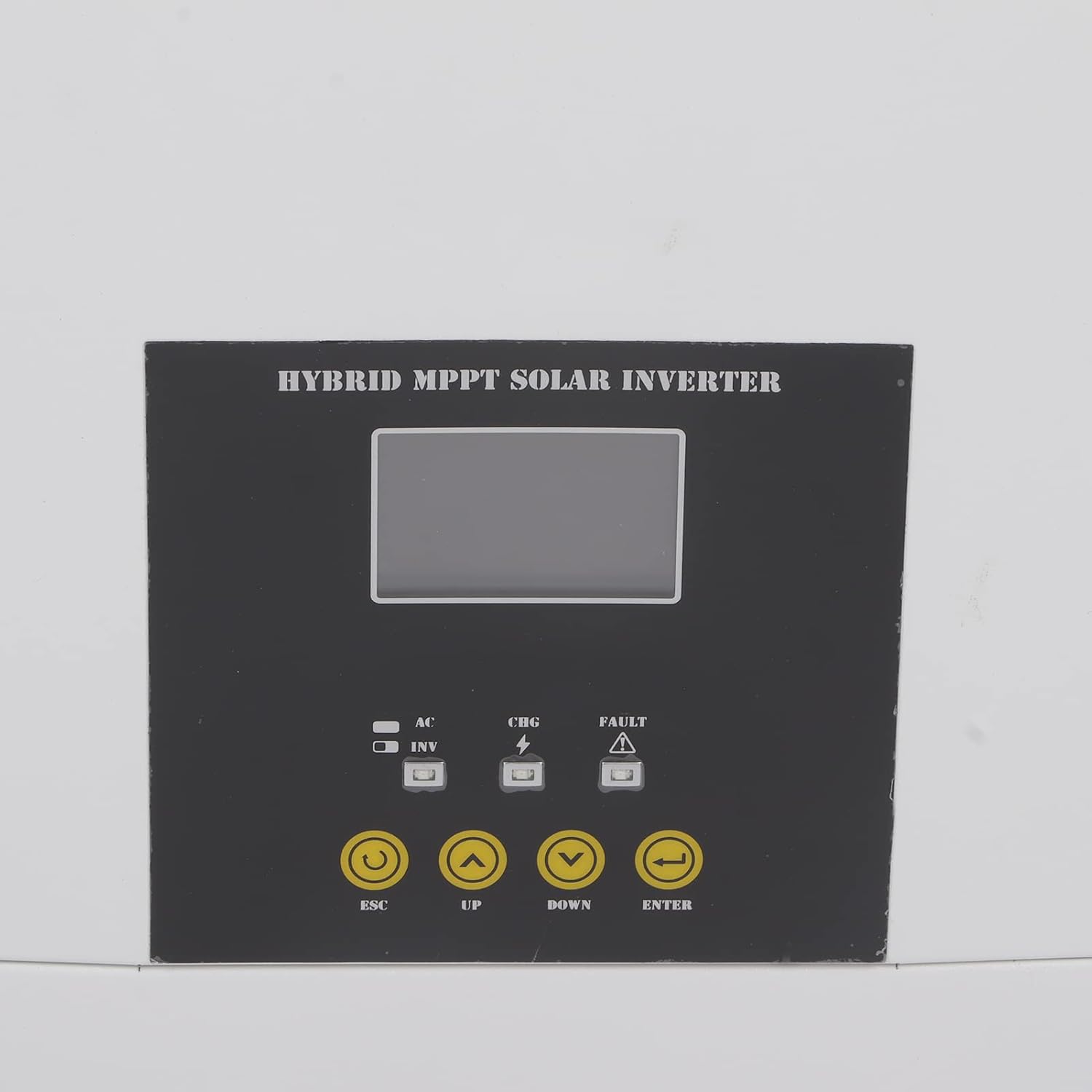
Ukuvala view of the inverter's control panel, featuring the LCD screen, LED indicators (AC/INV, CHG, FAULT), and operation buttons (ESC, UP, DOWN, ENTER) for system management.
3.2 Izindlela Zokusebenza:
You can select from various charging and output modes to optimize energy usage:
- Izindlela zokushaja:
- Solar Kuphela
- Okubalulekile Kwensiza
- Solar Energy Priority
- Hybrid Utility Charging
- Amamodi Okukhiphayo:
- Inverter (Battery/Solar)
- Utility (Bypass)
3.3 Remote Monitoring (WiFi):
The inverter supports WiFi remote monitoring, allowing you to view system data and adjust settings from a distance. Refer to the dedicated WiFi module instruction manual for setup and application details.

A detailed shot of the communication ports on the inverter, specifically showing the Ethernet (COMM PORT) and USB ports for data transfer and remote monitoring.
4. Isondlo
Regular maintenance ensures the longevity and optimal performance of your hybrid solar inverter.
- Ukuhlanza: Periodically clean the exterior of the inverter with a soft, dry cloth. Ensure ventilation openings are free from dust and debris to prevent overheating.
- Ukuhlola Ukuxhumana: Annually inspect all electrical connections for tightness and signs of corrosion. Loose connections can lead to power loss or overheating.
- Izimo Zemvelo: Ensure the inverter is operating within its specified temperature range (-10-50℃) and in a well-ventilated area, free from excessive humidity or direct sunlight.
- Ukuvuselelwa kwe-Firmware: Hlola okomkhiqizi website for any available firmware updates to ensure your inverter has the latest features and bug fixes.
5. Ukuxazulula izinkinga
This section provides guidance for common issues you might encounter. For complex problems, please contact technical support.
5.1 Izinkinga Ezivamile Nezixazululo:
- Akukho Okukhiphayo Amandla:
- Check if the inverter is powered on and all breakers are engaged.
- Qinisekisa umthamo webhethritagi-e ingaphakathi kwebanga lokusebenza.
- Check for any fault indicators on the LCD or LED display.
- Ukuvikelwa kokulayishwa ngokweqile kucushiwe:
- Reduce the connected load. The inverter has overload protection to prevent damage.
- Restart the inverter after reducing the load.
- Fault Indicator On:
- Refer to the specific error code displayed on the LCD (if any) in the detailed instruction manual for diagnosis.
- Common faults include overvoltage, ukungasebenzitage, short circuit, or reverse polarity.
- WiFi Remote Monitoring Issues:
- Ensure the WiFi module is correctly installed and connected.
- Check your network connection and router settings.
- Verify the monitoring application is up to date.
6. Imininingwane Yezobuchwepheshe
Detailed specifications for the SAKO Hybrid Solar Inverter.
| Ukucaciswa | Inani |
|---|---|
| Uhlobo Lwento | I-Hybrid Solar Inverter |
| Okubalulekile | Insimbi, ABS |
| Amandla | 5.5 KVA, 5500 W |
| Umbala | Okumhlophe nokuMnyama |
| Isici samandla | 1.0 |
| I-Operating Temperature Range | -10-50 ℃ |
| Inverter Mode DC Input | 48 V DC, 127 A |
| Inverter Mode AC Output | 230 VAC, 50/60 HZ, 23.9 A |
| Solar Charger Mode MPPT Rated Current | 100 A |
| Solar Charger Mode Rated Power | 6000 W |
| Solar Charger Mode Maximum Solar Input Current | 18 A |
| Solar Charger Mode Rated Operating Voltage | 240v DC |
| Solar Charger Mode Maximum Solar Voltage (VoC) | 500v DC |
| Solar Charger Mode MPPT Voltage Ibanga | 120-450V DC |
| Usuku Lokuqala Luyatholakala ku-Amazon.com.be | Novemba 2, 2022 |
| Umkhiqizi | Tefola |
| Inkomba yomkhiqizi | Tefolai9goq3mhkp |
| Ukutholakala Kwezingxenye Ezisele | Ulwazi alutholakali ezingxenyeni ezisele |
| Ukusetshenziswa Okunconyiwe Komkhiqizo | Ikhaya |
| Umthombo wamandla | Amandla Elanga |
| Total Number of Power Outlets | 1 |
| Okokufaka Voltage | 48 volts |
| Amandla Okukhiphayo | 500 Watts |
| Ukusebenza kahle | 99.9% |
| Okukhipha Umqtage | 240 volts |
7. Iwaranti kanye Nokusekela
For warranty information, technical support, or service inquiries, please contact the manufacturer, Tefola, or your authorized dealer. Keep your purchase receipt as proof of purchase.
The included instruction manual provides more detailed information on specific error codes and advanced settings.