
1. Isingeniso
This manual provides detailed instructions for the safe and efficient installation, operation, and maintenance of the VENTS-US VKM 150 Metal Inline Duct Fan. The VKM 150 is a centrifugal impeller fan designed for boosting airflow in 6-inch ducts, suitable for various ventilation applications including bathrooms, kitchens, living areas, workshops, and warehouses. Please read this manual thoroughly before installation and operation.
2. Ulwazi Lokuphepha
Ngaso sonke isikhathi qaphela lezi zinyathelo zokuphepha ezilandelayo ukuze unciphise ingozi yomlilo, ukushaqeka kukagesi, noma ukulimala:
- Nqamula amandla ngaphambi kokusevisa noma ukuhlanza.
- Installation must comply with all local electrical and safety codes.
- Ungasebenzisi le fan nanoma iyiphi idivayisi yokulawula isivinini esiqinile ngaphandle kokuthi yenzelwe yona ngqo.
- Qinisekisa ukubeka phansi okufanele ukuze unciphise ingozi yokushaqeka kukagesi.
- Mount the unit with the lowest moving parts at least 8 feet (2.5 meters) above the floor or grade level.
- Install behind shutters for protection from rain if used in an exposed location.
- This fan is designed for indoor usage only.
3. Okuqukethwe Kwephakheji
Qinisekisa ukuthi zonke izingxenye zikhona futhi azilimele:
- VENTS-US VKM 150 Inline Duct Fan
- Abakaki Okufakwayo
- Intambo Yamandla
- Incwadi Yokufundisa (le dokhumenti)
4. Umkhiqizo Uphelileview
The VKM 150 is a robust metal inline duct fan featuring a centrifugal impeller for high static pressure applications. Its durable polymer-coated steel housing ensures longevity, and the permanently lubricated ball bearing motor provides maintenance-free operation.

Umfanekiso 4.1: Ngaphambili view of the VENTS-US VKM 150 Metal Inline Duct Fan, showcasing its blue housing and power connection box.

Umfanekiso 4.2: Ngemuva view of the VKM 150 fan, showing the internal impeller and mounting bracket attachment points.
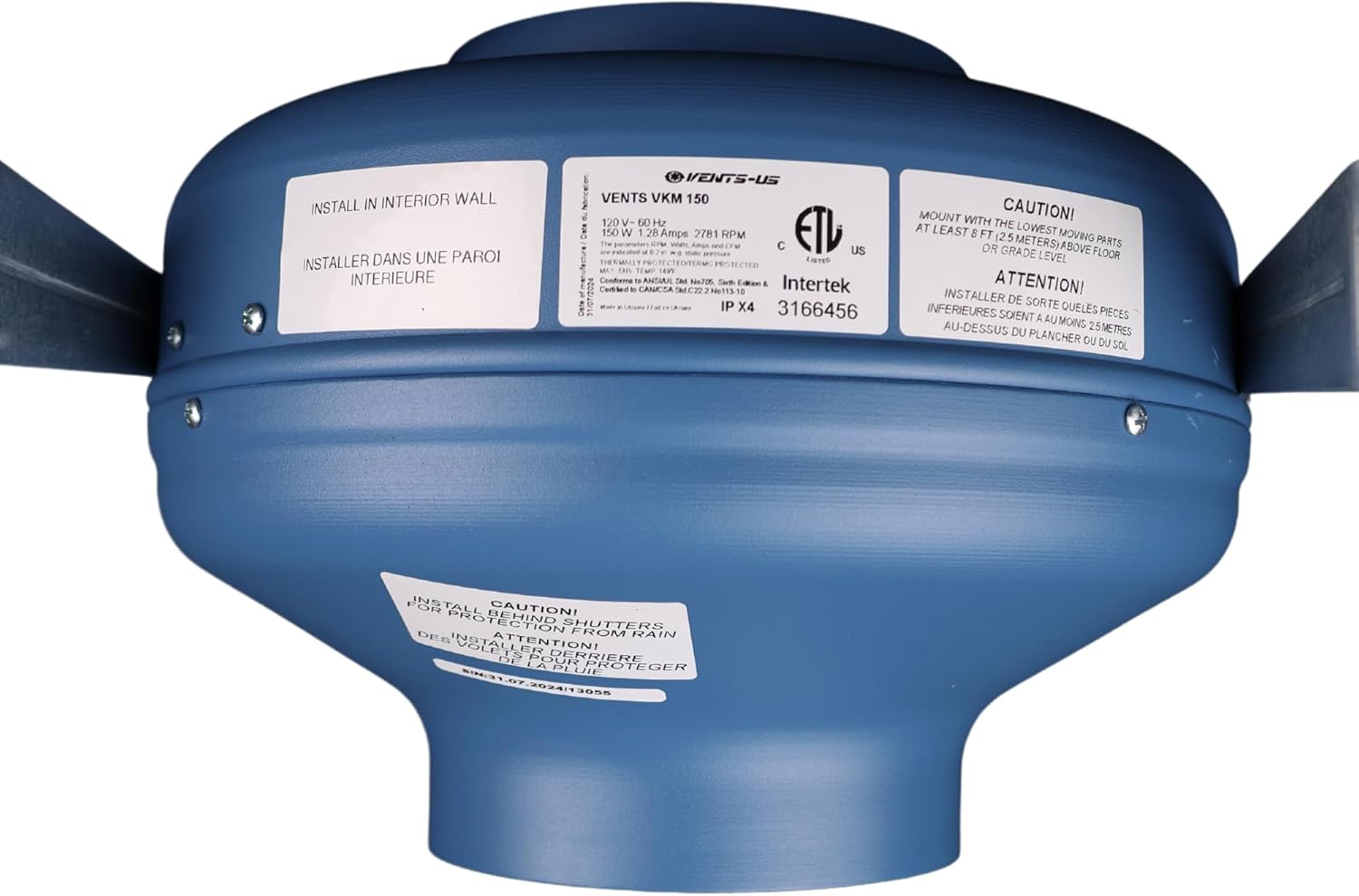
Umfanekiso 4.3: Phezulu view of the VKM 150 fan, displaying product labels with electrical specifications and safety warnings.

Umfanekiso 4.4: Uhlangothi oluseduze view of the electrical connection box on the VKM 150 fan.

Umfanekiso 4.5: I-engeli view of the VKM 150 fan, showing the pre-wired power cord and mounting brackets.
Ividiyo 4.1: Ngaphezuluview of the VKM Inline Centrifugal Metal Fan Series, highlighting its features and applications.
5. Imininingwane
| Isici | Ukucaciswa |
|---|---|
| Igama Lemodeli | VKM 150 |
| Ibhrendi | I-VENTS-US |
| I-Duct Diameter | 6 amayintshi |
| Amandla Okugeleza komoya | 460 CFM (at 0" static pressure) / 422 CFM (at 0.2" static pressure) |
| Wattage | 152 watts |
| Voltage | 120 volts |
| Isivinini | 3287 RPM |
| Izinga Lomsindo | 3.2 Amasoni |
| Uhlobo Lwezimoto | Single-phase external rotor motor with backward curved centrifugal impellers, permanently lubricated ball bearings |
| Impahla Yezindlu | Insimbi ene-polymer |
| Ubukhulu bomkhiqizo | 8.69"D x 13.75"W x 11.94"H |
| Isisindo sento | 12.07 amakhilogremu |
| Uhlobo Lokufaka | Emugqeni |
| Ukusetshenziswa Kwangaphakathi/Kwangaphandle | Ngasendlini |
| Isitifiketi | I-ETL |

Figure 5.1: Dimensional drawing of the VKM 150 fan, showing key measurements for installation planning.
6. Ukusetha nokufakwa
The VKM 150 fan is designed for straightforward installation in 6-inch ducting. It comes pre-wired with a power cord and includes mounting brackets for convenience.
6.1 Ukukhweza Ifeni
- Khetha Indawo: Choose a suitable location within your duct system. Ensure there is enough space for the fan and access for future maintenance. Remember to mount the fan with the lowest moving parts at least 8 feet (2.5 meters) above the floor or grade level.
- Namathisela Abakaki: Secure the included mounting brackets to a stable surface (e.g., ceiling joist, wall stud) using appropriate fasteners (not included).
- Isikhundla Umlandeli: Place the fan onto the mounting brackets and secure it firmly.
6.2 Ukuxhumeka Kwepayipi
- Xhuma ipayipi: Connect the 6-inch ductwork to both inlet and outlet ports of the fan.
- Vikela Ukuxhumana: Use duct clamps or aluminum tape to create airtight seals at all connections. This prevents air leakage and ensures optimal performance.
6.3 Ukuxhunywa kukagesi
- Cisha ugesi: Ensure the main power supply to the installation area is turned off at the circuit breaker before making any electrical connections.
- Xhuma: The VKM 150 comes with a pre-wired power cord. Plug the power cord into a standard 120V AC outlet.
- Verify Grounding: Confirm that the outlet provides proper grounding.
Qaphela: Wonke umsebenzi kagesi kufanele wenziwe nguchwepheshe kagesi oqeqeshiwe futhi uhambisane nemithetho yendawo.
7. Iziqondiso Zokusebenza
The VKM 150 fan operates at a single speed. Once properly installed and connected to power, it is ready for operation.
- Vula: Restore power to the circuit at the breaker.
- Yenza kusebenze abalandeli: If connected to a wall switch or other control device, turn it on to activate the fan.
- Qinisekisa Ukusebenza: Listen for the fan to start and feel for airflow through the duct system.
The fan is designed for continuous operation in appropriate environments. Control methods can include a simple on/off switch or more advanced app-based controls if integrated into a smart home system (requires compatible third-party devices, not included).
8. Isondlo
The VKM 150 fan features a permanently lubricated ball bearing motor, requiring minimal maintenance. However, periodic cleaning is recommended to ensure optimal performance and longevity.
8.1 Imiyalo Yokuhlanza
- Nqamula Amandla: ISEXWAYISO: Always disconnect power to the fan at the circuit breaker before attempting any cleaning or maintenance.
- Access Impeller: Carefully remove any duct connections to access the fan's impeller.
- Clean Impeller and Housing: Use a soft brush or vacuum cleaner to remove dust and debris from the impeller blades and the interior of the fan housing. Avoid using harsh chemicals or abrasive materials.
- Phinda uhlanganise: Reconnect ducting and ensure all connections are secure before restoring power.
Imvamisa: Cleaning frequency depends on the operating environment. In dusty or greasy environments, more frequent cleaning may be necessary.
9. Ukuxazulula izinkinga
If you experience issues with your VKM 150 fan, consult the following table before contacting support.
| Inkinga | Imbangela Engenzeka | Isixazululo |
|---|---|---|
| Ifeni ayivuli. | Akukho ukunikezwa kwamandla. Faulty switch/control. Izintambo ezixegayo. | Hlola i-circuit breaker. Test switch/control. Inspect wiring connections (ensure power is off). |
| Ukugeleza komoya okwehlisiwe. | Clogged impeller/ducts. Duct leakage. Incorrect duct size. | Clean impeller and ducts. Seal all duct connections. Ensure 6-inch ducting is used. |
| Umsindo owedlulele noma ukudlidliza. | Ukukhweza okuxekethile. Imfucumfucu ku-impeller. Impeller elimele. | Tighten mounting hardware. I-impeller ehlanzekile. Contact VENTS-US support if impeller is damaged. |
| Fan runs intermittently. | Overheating (thermal overload). Uxhumano lukagesi oluxegayo. | Ensure adequate ventilation around the fan. Check electrical connections (power off). |
10. Iwaranti kanye Nokusekela
VENTS-US products are manufactured to high-quality standards. For specific warranty details, please refer to the warranty card included with your product or visit the official VENTS-US website. If you require technical assistance or have questions not covered in this manual, please contact VENTS-US customer support.
VENTS-US Contact Information:
- Webindawo: Visit the VENTS Store on Amazon
- Insizakalo yekhasimende: Refer to your product packaging or the VENTS-US webindawo yemininingwane yokuxhumana yamanje.