
Isingeniso
Thank you for choosing the Amazon Basics Vacuum Sealer Machine. This manual provides essential information for the safe and efficient operation, maintenance, and troubleshooting of your new appliance. Please read these instructions thoroughly before first use and retain them for future reference.
This vacuum sealer is designed to preserve food by removing air from specially designed bags, extending freshness and flavor. It is also suitable for preparing food for sous vide cooking and protecting non-food items from moisture and air.
Imiyalelo Ebalulekile Yezokuphepha
- Funda yonke imiyalelo ngaphambi kokusebenzisa.
- Ungacwilisi into esetshenziswayo, intambo kagesi, noma uyixhume emanzini noma kolunye uketshezi.
- Lo mshini awuhloselwe ukusetshenziswa abantu (okuhlanganisa nezingane) abanekhono elincishisiwe lomzimba, lezinzwa noma lengqondo, noma abangenalo ulwazi nolwazi, ngaphandle uma benikezwe ukugadwa noma umyalelo ophathelene nokusetshenziswa kwento esebenza ngumuntu onesibopho sokuphepha kwabo.
- Izingane kufanele zigadwe ukuze kuqinisekiswe ukuthi azidlali ngalo mshini.
- Khipha ipulaki lapho ingasetshenziswa nangaphambi kokuhlanza. Vumela ukuthi kuphole ngaphambi kokugqoka noma ukukhipha izingxenye, nangaphambi kokuhlanza umshini.
- Ungasebenzisi noma iyiphi into esebenza ngentambo noma ipulaki eyonakele noma ngemva kokungasebenzi kahle komshini, noma yonakale nganoma iyiphi indlela.
- The sealing strip becomes hot during operation. Avoid direct contact.
- Use only Amazon Basics vacuum sealer bags or rolls designed for this appliance.
- Lolu hlelo lokusebenza lusetshenziswa ekhaya kuphela. Ungasebenzisi ngaphandle.
Umkhiqizo Uphelileview
Familiarize yourself with the components of your vacuum sealer.
Isithombe 1: Phezulu view of the Amazon Basics Vacuum Sealer Machine. This image shows the sleek black design of the appliance with its control panel visible on the top surface.

Isithombe 2: Ngaphakathi view of the Amazon Basics Vacuum Sealer Machine with the lid open. This image highlights the vacuum channel, sealing strip, and foam gaskets.

Isithombe 3: Close-up of the control panel on the Amazon Basics Vacuum Sealer Machine. Buttons for Dry, Moist, Pulse Vacuum, Seal, Vacuum & Seal, and Cancel are clearly visible.
Izingxenye Ezibalulekile:
- Iphaneli yokulawula: Buttons for various sealing modes (Dry, Moist, Pulse Vacuum, Seal, Vacuum & Seal, Cancel).
- Vacuum Channel: Area where air is extracted from the bag.
- Umugqa wokuvala: Heats up to create an airtight seal.
- Ama-Gaskets: Create a vacuum chamber seal.
- Lid Latches: Secure the lid during operation.
- Integrated Bag Cutter: For custom-sized bags from rolls.
- Imbobo yesisetshenziswa: For external vacuuming of canisters (accessory hose not included).
Setha
- Khipha umshini kagesi: Carefully remove the vacuum sealer from its packaging. Retain packaging for storage or future transport.
- Hlola Umonakalo: Hlola ukuthi umshini wokusebenza ukhona yini izimpawu zomonakalo. Ungawusebenzisi uma wonakele.
- Clean the Appliance: Sula ingaphandle ngesikhangisoamp cloth. Ensure the sealing strip and vacuum channel are clean and dry.
- Misa Isisetshenziswa: Place the vacuum sealer on a flat, stable, and dry surface. Ensure there is enough space around it for operation.
- Ukuxhuma kwamandla: Plug the power cord into a standard electrical outlet. The appliance is ready for use.
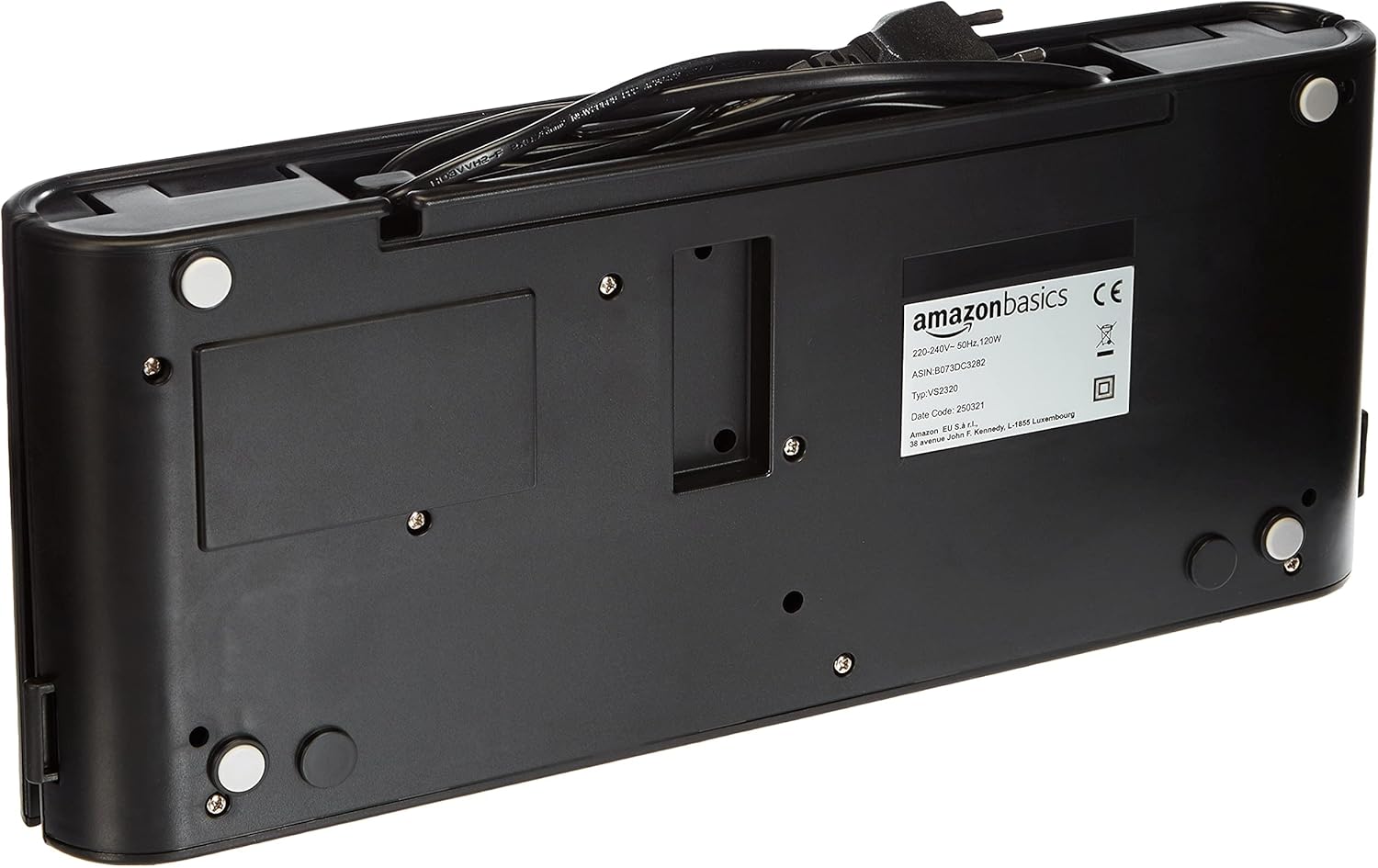
- Isitoreji Sentambo: The appliance features integrated cord storage on the underside for neat organization.

Isithombe 4: Underside of the Amazon Basics Vacuum Sealer Machine, showing the power cord neatly stored in the integrated compartment.
Imiyalelo yokusebenza
This section details how to use your vacuum sealer for various food types and sealing needs.
Preparing Bags:
- Use only compatible vacuum sealer bags or rolls.
- When using a roll, pull out the desired length and use the integrated cutter to create a bag. Seal one end using the "Seal" function before filling.
- Leave at least 7-10 cm (3-4 inches) of space between the food and the top of the bag to ensure a proper seal.
- Ensure the inside of the bag near the sealing area is clean and dry. Moisture or food particles can prevent a proper seal.
Ukudla kokuvala i-vacuum:
- Izindawo zokuhlala ezengeziwe e-Bag: Put the food item into the vacuum sealer bag.
- Misa isikhwama: Open the lid of the vacuum sealer. Place the open end of the bag into the vacuum channel, ensuring it lies flat and smooth over the sealing strip. The bag opening should be fully inside the vacuum channel.
- Vala Isivalo: Press down firmly on both sides of the lid until you hear a click, indicating it is securely latched.
- Khetha Imodi:
- Imodi eyomile: For dry food items. Press the "Vacuum & Seal" button. The machine will automatically vacuum the air and then seal the bag.
- Imodi Emanzi: For moist or liquid-rich food items. Press the "Moist" button, then "Vacuum & Seal". This mode adjusts the vacuum pressure and sealing time for better results with moist foods.
- Pulse Vacuum: For delicate foods (e.g., bread, chips) where full vacuum might crush them. Press and hold "Pulse Vacuum" to manually control the vacuum process. Release the button when the desired vacuum level is reached, then press "Seal" to seal the bag.
- Faka uphawu kuphela: To create a seal without vacuuming (e.g., for making bags from a roll, or resealing bags). Place the bag end over the sealing strip and press "Seal".
- Inqubo yokuqapha: The machine will indicate when the process is complete (e.g., indicator light turns off).
- Khipha futhi Ususe: Press the release buttons (if present, or lift the lid firmly) to open the lid. Remove the sealed bag.

Isithombe 5: A visual step-by-step guide demonstrating the process of preparing a bag, placing it in the vacuum sealer, and initiating the vacuum and seal process. This collage shows the bag cutter, bag placement, and button presses.
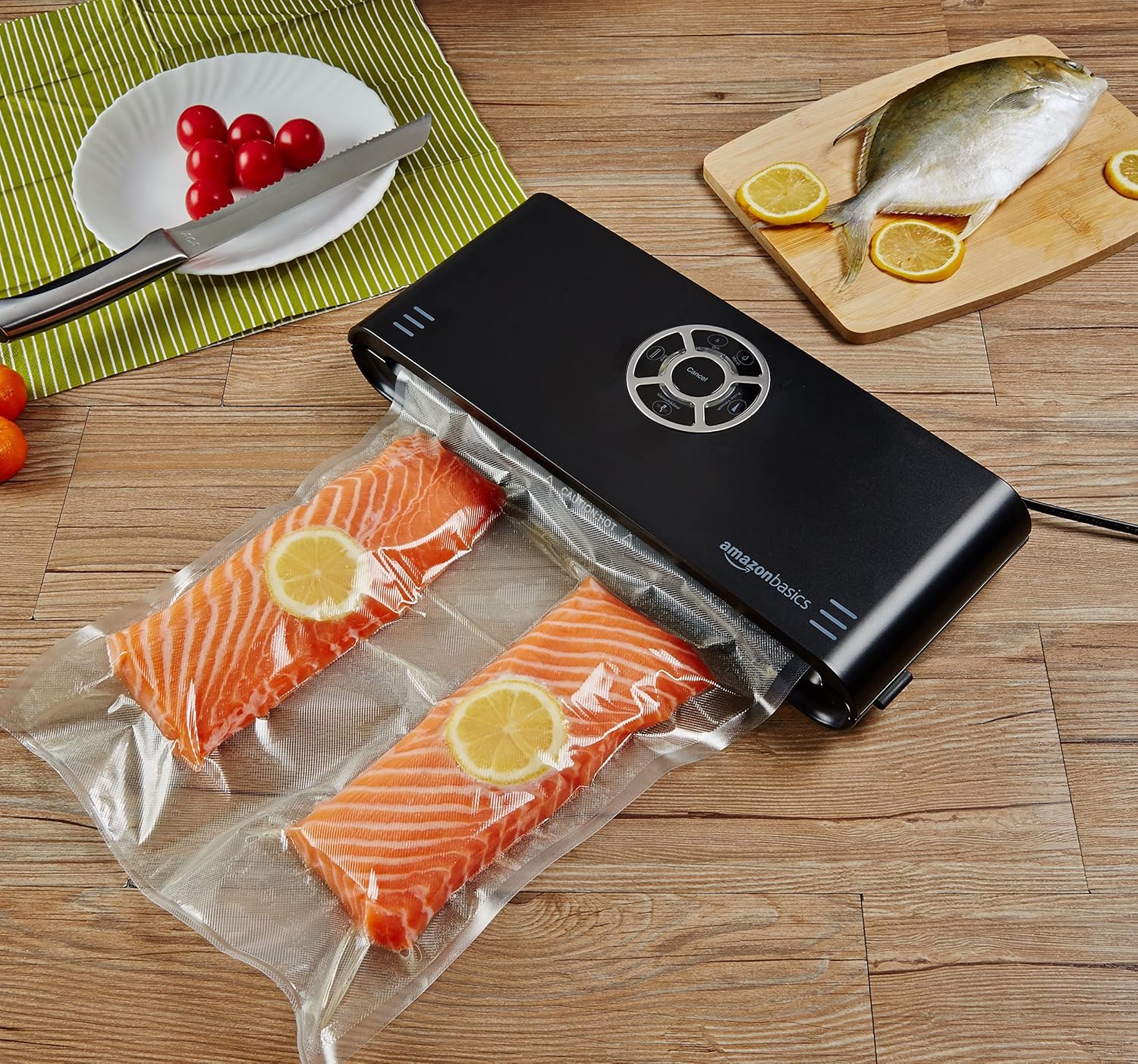
Isithombe 6: Two salmon fillets vacuum-sealed in bags, ready for storage or cooking. This image illustrates the end result of the vacuum sealing process.
Isondlo
Proper maintenance ensures the longevity and optimal performance of your vacuum sealer.
- Ukuhlanza:
- Ngaso sonke isikhathi khipha ipulaki ngaphambi kokuhlanza.
- Sula ingaphandle ngesikhangisoamp indwangu nensipho ethambile. Ungasebenzisi izinto zokuhlanza ezihlabayo.
- Clean the vacuum channel and sealing strip after each use, especially if sealing moist foods. Use a damp cloth to remove any food residue. Ensure these areas are completely dry before next use.
- Ungacwilisi umshini emanzini.
- Ukunakekelwa kwe-Gasket:
- Inspect the foam gaskets regularly for any signs of wear, tears, or deformation. Damaged gaskets can prevent a proper vacuum seal.
- Clean gaskets with a damp indwangu.
- Isitoreji:
- Store the appliance with the lid unlatched to prevent compression of the gaskets, which can lead to permanent deformation and affect sealing performance.
- Gcina endaweni epholile, eyomile.
Ukuxazulula inkinga
Uma uhlangabezana nezinkinga nge-vacuum sealer yakho, bheka izinkinga nezixazululo ezilandelayo ezivamile:
| Inkinga | Imbangela Engenzeka | Isixazululo |
|---|---|---|
| Umshini awuvuli. | Ayixhunyiwe; ukungasebenzi kahle kwe-power outlet. | Qinisekisa ukuthi intambo kagesi ixhunywe ngokuphephile endaweni esebenzayo. |
| Umshini uyavala kodwa awuvali. | Bag not positioned correctly; sealing strip or gaskets dirty/damaged; bag material incompatible. |
|
| Umshini uyavala kodwa awuvali. | Lid not properly latched; gaskets dirty/damaged; bag not positioned correctly. |
|
| Air leaks into the bag after sealing. | Improper seal; puncture in bag; food with sharp edges. |
|
| Isikhwama siyancibilika ngesikhathi sokuvala. | Sealing time too long (rare for automatic machines); bag not suitable. |
|
Imininingwane
| Inombolo Yemodeli | VS2320EU |
| Ibhrendi | Amazon Basics |
| Ubukhulu (L x W x H) | 38 x 15.19 x 5.89 cm (14.96 x 5.98 x 2.32 amayintshi) |
| Isisindo | 1.38 kg (3.04 lbs) |
| Okubalulekile | Ipulasitiki Nensimbi |
| Umbala | Mnyama |
| Seal Ububanzi | 30 cm (11.8 amayintshi) |
| Vacuum Amandla | 90% at 0.8 bar |
| Seal Bar Thickness | 3 mm |
| Izwe azalelwe kulo | China |
| Izici ezikhethekile | Powerful automatic vacuum system, Multiple operating modes (Dry/Moist/Pulse), Strong seal, Integrated bag cutter, Cord storage |
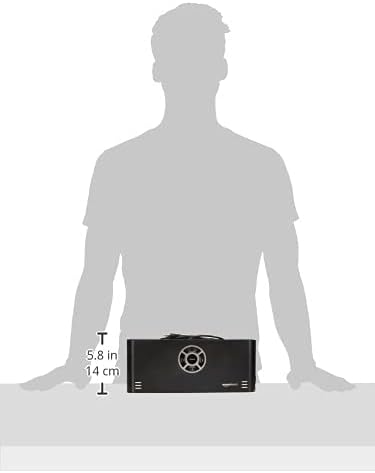
Isithombe 7: Diagram illustrating the dimensions of the Amazon Basics Vacuum Sealer. The image shows the height of the machine as 5.8 inches (approximately 14.7 cm). Please note a slight discrepancy with the listed specification of 5.89 cm for height, which may be a typographical error in the source data.
Iwaranti kanye Nokusekela
Ukuze uthole ulwazi lwewaranti kanye nokusekelwa kwamakhasimende, sicela ubheke amadokhumenti afakiwe ekuthengeni kwakho noma uvakashele i-Amazon Basics esemthethweni. webindawo.
Ukusekelwa Kwe-inthanethi: For the most up-to-date information, FAQs, and contact options, please visit Isevisi yamakhasimende e-Amazon.